






CLAIRE
Now we wait for the tenders to arrive.
MOIRA
Still can’t believe I’ve never had the Grill’d tenders when you’re this hype about them.
CLAIRE
Insanity.
MOIRA
So Claire, I’ve been having thoughts. Do you think food is art? I’ve been seeing chefs or cooks appear on artist panels, I’ve been seeing new Food Art Masters degrees in Europe. But I think there’s a part of calling food art that gives me the ick, and I wanna unpack that. Liam, you’re here too. Do you have thoughts?
LIAM
I think food can be art. I don't think food inherently is or is not art, but it definitely has potential to be. There's some interesting grey areas… food which is presented artistically, but ultimately still functions as food more than art because the point is to eat it. Or food which is presented plainly, but in an art context, with no intention of it being eaten.
CLAIRE
Moira, would you say that amazing event you did with the rice towers was art?
MOIRA
In a way, in the sense that I was using rice as a material. Context for readers, I made a freaky nasi tumpeng, which is an Indonesian ceremonial dish, for an event. It involved making sculptural towers of rice, and landscapes of rivers and shit with side dishes, and built tables and a room around it.
CLAIRE
And then everyone ate it.
MOIRA
And everyone ate it.
CLAIRE
So, food beyond sustenance.
LIAM
The other part of that piece is the context that it was at an experimental music event with a lot of arty people. In that space, it's going to be interpreted more as creative work than pure sustenance. I think it's interesting when it crosses over to being so art that it's not food anymore.
CLAIRE
Food through the creative lens, with visual representation being of greater importance than taste. Is someone like Laila Gohar a food artist?
MOIRA
I actually don't know this person.
CLAIRE
Okay. That is, like, one of the most upsetting things I've ever heard. Give me my phone. You've never heard of Laila Gohar?
MOIRA
I've never seen this woman before in my life.
CLAIRE
Are you joking?
MOIRA
I'm a boomer trapped in this body. You know this.
CLAIRE
That's crazy to me. I kind of love it, though. She became really popular for these butter sculptures, and she did an installation with a million pieces of baklava. She spoke about how when she flies to the Middle East, she looks out the window and sees the topography of those countries from above, and her food looks like that. She also made this cake that looks like an ass.
MOIRA
Is it yummy, or does it not matter?
CLAIRE
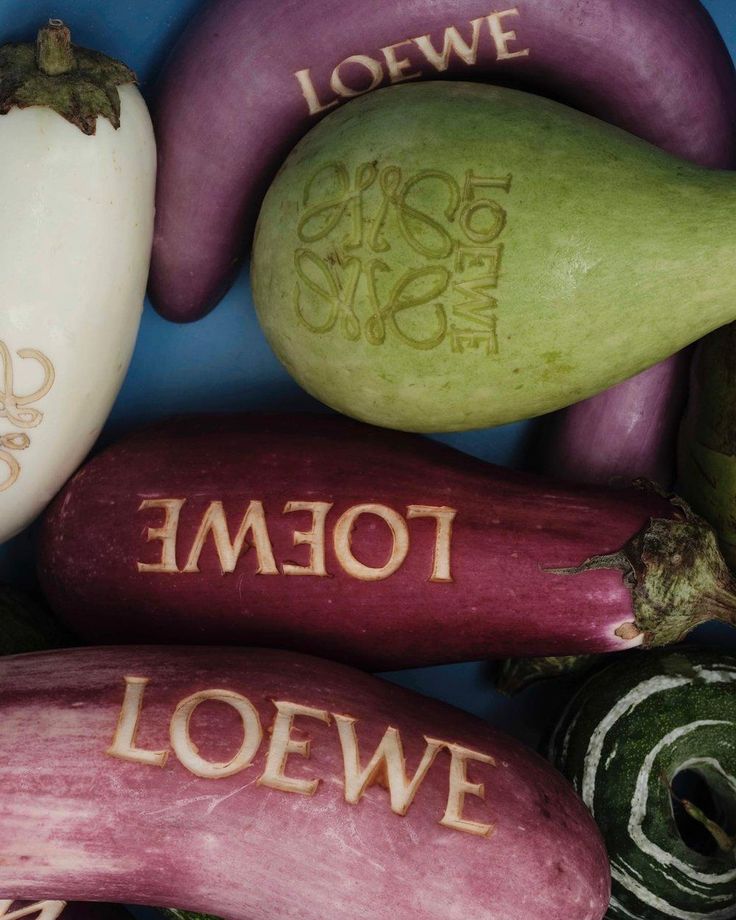
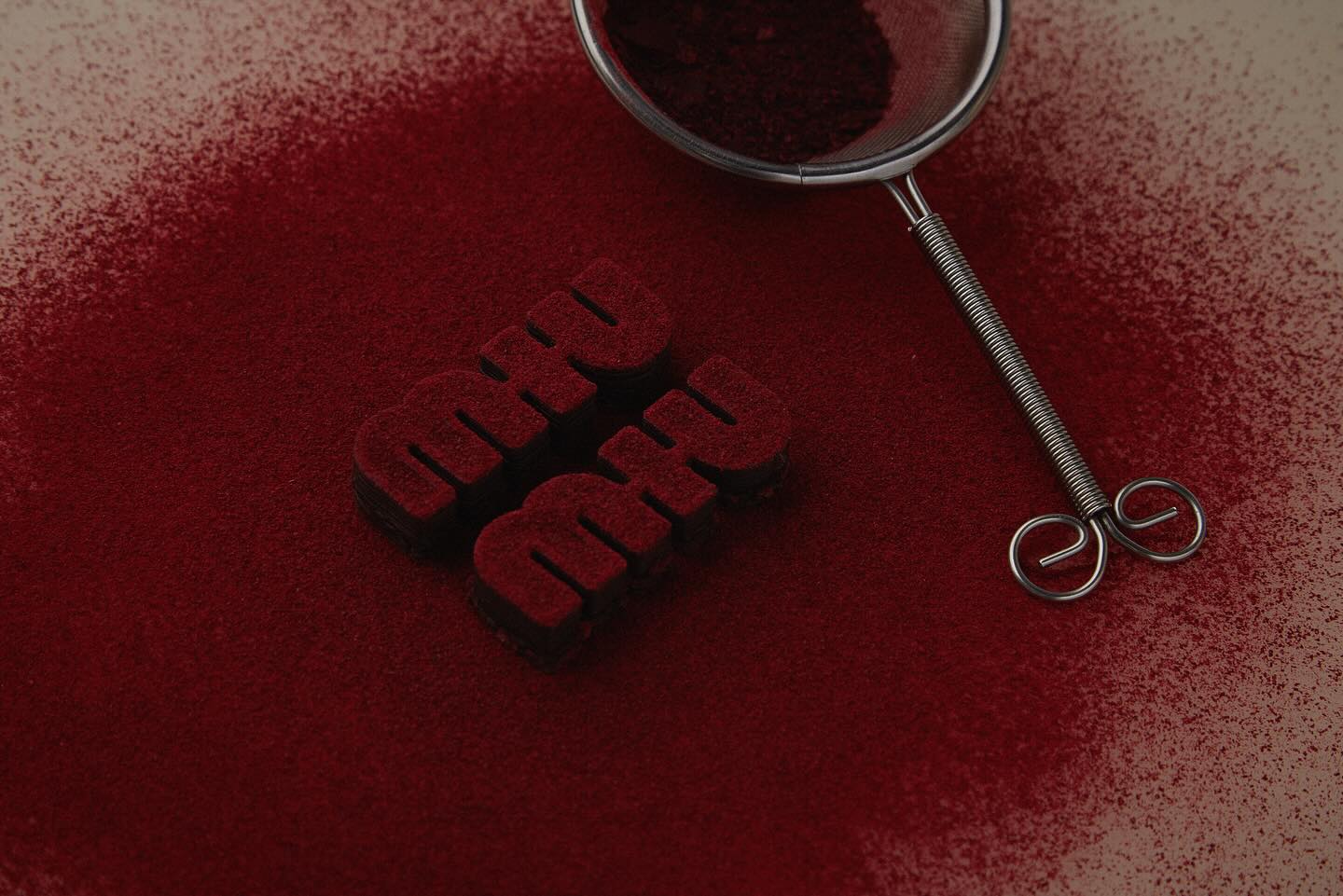
Well, I have no idea. That's part of this question. But I would say that the look of something, for example an eggplant with an embossed Loewe logo, matters more that it has the Loewe logo than that it tastes delicious. And that's what food is in a fashion context; a prop, an aesthetic object in service of someone else's vision. And if it does taste delicious, fabulous. But that's tertiary to the look and feel of it.
LIAM
If the object in question never gets eaten, does that mean it was never really intended to be food? Do Laila Gohar’s butter sculptures get eaten?
CLAIRE
I think they definitely get eaten.
MOIRA
So, I maintain this, where treating food like material–
CLAIRE
–so the only time food is art to you is in its materiality?
MOIRA
I think it's like the clearest line to draw. The time when it feels safely in the green to call it art. [REDACTED] would say that art is something that sets out to express something, to say something, make sense of something. Where the intention is bigger than the thing they’re making or stands for something greater than itself.
LIAM
I think the clearest line for me is context. Material is less important than context, because you can put almost food in an art context and it will be received as art. And if you take it out of the art context, it's not art anymore. For instance, the banana at the Venice Biennale.
CLAIRE
Which sold for like 6 million or something.
MOIRA
There was also that artist Duchamp, who put a urinal in a gallery, to the suggestion that something is deemed art by its context. And maybe my gripe with the fine dining thing is it makes the restaurant the gallery and then it gets to call itself art.
LIAM
It changes your perception of it. It's the same hegemony. It’s the white cube.
MOIRA
For me this raises the question of who actually gains from calling food art? I fear that in this god-forsaken capitalist hellscape, calling food ‘art’ in Melbourne, or the Western world, turns what was once culture into a commodity. If food is art, who is the artist? Because so many hands make the dishes attached to the one person's name in fine dining.
CLAIRE
As a direct allegory: Jeff Koons’ name is on the Balloon Dog. And I'm telling you right now, Jeff Koons ain't building.
MOIRA
That’s a good point. I guess I’m pissed that people who are calling food ‘art', are the René Redzepis of the world, whereby calling their food ‘art’ holds up the elitism of the fine dining world and justifies the toxic culture of labour exploitation, cultural appropriation, abuse. There’s so much food out there that’s imbued with cultural memory, heritage, identity but those people would never call their food art, which to me, is way closer to art than anything Redzepi's doing.
CLAIRE
I'm telling you, René Redzepi is going in there with so much intention as to why he has created these things, dishes. There's story and concept and something political to say. But I get what you’re saying, maybe food only being given ‘art’ status within these fine dining institutes limits the potential of what's trying to be communicated by people whose knowledge systems are more embodied, or maybe who don't feel like they have the status or the clout to be able to use that kind of artsy language.
LIAM
Right, not everyone has access to the framework and the context which to me dictates whether something gets to be called art or not. If you don’t have a white cube at your disposal, or an Instagram account with a curated aesthetic and lots of stainless steel trays to plate things on, you’re going to have a harder time positioning your food as art.
CLAIRE
There's a part of me that's like, the creativity and the desire to create in a cook is the same as the desire to create in an artist, in a painter, in a musician. To me, almost all food is art. I'm thinking, is art like porn? You know it when you see it?
MOIRA
I don't know if that's always true. Not every painter or musician, or cook is an artist. They might just be craftsmen doing the thing as a job, without the intention of expression behind it. Liam, graphic design is your craft, your job, is it art?
LIAM
Not if it’s doing its job properly. Graphic design is problem solving, art is expression.
CLAIRE
No. So like okay, we've talked about the intention before it gets to us. We haven't talked about the intention once it gets to us. I go to Japan, I order a bowl of ramen or I go to India and I order a plate of dal where I am amongst the entirety of what it means to interact with something in its place, in its purpose, in its intention. You don't think that could be as transformative as standing in front of a piece of art?
MOIRA
I don't think it's about the experiencer's experience of it. The creator isn’t in control of whether something is art. My thinking is that an artist can make something that's never consumed and it's still art. But the reverse is trickier.
LIAM
It being transformative isn’t what makes art art though; sometimes I feel very moved by things you couldn’t reasonably call art.
MOIRA
My thinking is that an artist can make something that's never consumed and it's still art. But the reverse is trickier.
CLAIRE
I think the real discussion is in the nature of how we codify certain things. People's desire to codify something as art isn’t necessarily a sign that said thing is, or is not, art. I just think it's the way in which Western civilization heads towards assigning something value in our society.
MOIRA
So the question isn't whether food deserves the label of art. It's whether the label is even worth fighting for, or whether it just reproduces the same hierarchies.
LIAM
Yeah, are we just reinforcing the same hegemony in different flavours? The fine dining and art gallery worlds feel similarly aligned in this sense that they present these disruptive ideas that feel almost like a challenge, “I dare you to call this out as not being art, or not being food.” The whole thing kind of relies on everyone being a little too intimidated to, like, call it out as being sort of ridiculous.
MOIRA
I think really, throughout history and before ‘gastronomy’, food has always been a form of expression, whether that’s care or independence. The sharing of recipes, the cultural connection. It’s all expression.
CLAIRE
Which is… art?